Topic of Tea Brand – Uji Cha
What do we think when we mention Uji Cha? The first impression of many people may be Matcha, and then they associate with various dessert shops called “Uji Matcha” on the commercial street. In fact, the scope of Uji tea is far beyond that, and its concept cannot be abused. Uji tea, together with Shizuoka tea and khayama tea, is known as the three major Japanese teas, and is the senior brand of Japanese green tea. In addition to Matcha, it also includes other categories: fried tea, jade dew, pan tea, baked tea, etc. Yulu and Matcha produced by Uji are the first in Japan.
Uji tea is a regional brand concept with a strict definition. The association of tea enterprises in Kyoto, which is composed of the producers of Uji tea, defines Uji tea as follows: using the tea produced in Kyoto, Nara, Shiga and Sanzhong counties, and processing them in Kyoto, that is, “Uji tea”. Therefore, many domestic Matcha products on sale cannot be labeled as “Uji Tea”.
Marukyu Koyamaen and Itoh Kyuemon, both of which are famous old Uji tea shops, are Uji teahouses authorized by the “Uji Tea Village Development Association”. The two brands complement each other in brand personality. Marukyu Koyamaen adheres to the “quality standard” concept of tea making, and its tea products have repeatedly won awards such as ministerial awards. Itoh Kyuemon conveys the new value of tea on the basis of tradition. It has advanced the deep processing of tea products, and has launched a new type of tea dishes with a wide range and a wide variety. Together, they constitute the Uji tea brand that embodies the spirit of the tea ceremony.
1. Marukyu Koyamaen: “Quality Standard” tea treatment concept
In the year of Yuanlu (1688-1703), Marukyu Koyamaen’s first ancestor, Kojiro Koyama, began to cultivate and manufacture tea in the Xiaocang area suitable for planting tea, which has created a long history of Marukyu Koyamaen. The tea people of Marukyu Koyamaen have been handed down from generation to generation and are committed to improving all aspects and maintaining the tradition and quality of Uji tea. The fourth generation of tea people began to sell tea. In the Meiji period, the eighth generation of Yuanjiro expanded its sales network to the whole country of Japan. At present, Marukyu Koyamaen has gone through more than 300 years of history.
Marukyu Koyamaen has implemented the “quality standard” concept of tea production in all links from cultivation to production. In order to improve its own quality, it will select and send tea every year, participate in competitions such as the all-Japan tea evaluation conference, and repeatedly win awards such as ministerial awards. It has won the first place in the All-Japan Tea Review Conference for 21 times, the first place in the Kansai Tea Review Conference for 9 times, and the first place in the All-Japan Tea Review Technical Competition Conference for 2 times.
Marukyu Koyamaen operates a variety of subdivided Uji tea, including macha, fried tea, roasted tea, Xuanmi tea, Guancha, Yulu, tea bag, etc. The packaging color is light, elegant and exquisite.
2. Itoh Kyuemon: the ultimate extension of tea products
Itoh Kyuemon, which has a history of more than 180 years, is a famous old Uji tea shop in Kyoto, and is also the designated tea supplier of famous temples and shrines such as Wanfu Temple, Ping’an Temple, Uji Temple of Equality. It is famous for all kinds of high-grade macha and macha series foods, and is a famous shop and tourist destination in Kyoto.
Itoh Kyuemon currently has five branches in Japan, among which the tea shop in Uji is the head store, and the other stores are JRUji station front store and the equality hospital store. The head office is the largest shop. Next to the Japanese national treasure – Uji Equality House (printed on the Japanese 10-yuan coin) is the Equality House shop. The head office has a complete range of business, and has prepared all kinds of Matcha products in the tea garden full of tea fragrance. It includes not only fresh and refrigerated desserts, but also Uji tea and Matcha dessert gift boxes that are very suitable for gifts to relatives and friends.
The brand concept of Itoh Kyuemon is to inherit the tradition and constantly integrate new elements into Uji tea to enhance the attraction of Uji tea. Uji tea can not only be brewed and drunk in a teapot, but also be enjoyed in a richer, more casual and more modern way of life. Therefore, Itoh Kyuemon has made great efforts in the deep processing of tea.
(1) Wide variety and exquisite packaging
Itoh Kyuemon has a wide range of tea processing products, including staple foods, desserts and snacks, to meet the different needs of consumers, and to strengthen its brand characteristics again. The staple food products are only for use in the store. The Matcha element is integrated into the traditional Japanese diet, resulting in the birth of meals such as Matcha buckwheat flour, Matcha curry rice, Matcha sushi, Matcha dumplings, and constantly absorbing consumer opinions to improve the taste.
In terms of desserts and refreshments, Itoh Kyuemon is not only deeply involved in the familiar food and beverage fields, such as dumplings, mutton soup, Dafu, etc., but also integrates Matcha into western snacks, introducing Matcha chocolate, Matcha Tiramisu, Matcha Popsicle, Matcha Buffet, Matcha Swiss roll and other products. Except for Baffy, all products have opened online sales channels, with prices consistent with those of physical stores, and can be distributed to all parts of Japan except remote islands, so that consumers across the country can taste Itoh Kyuemon’s products and expand income channels.
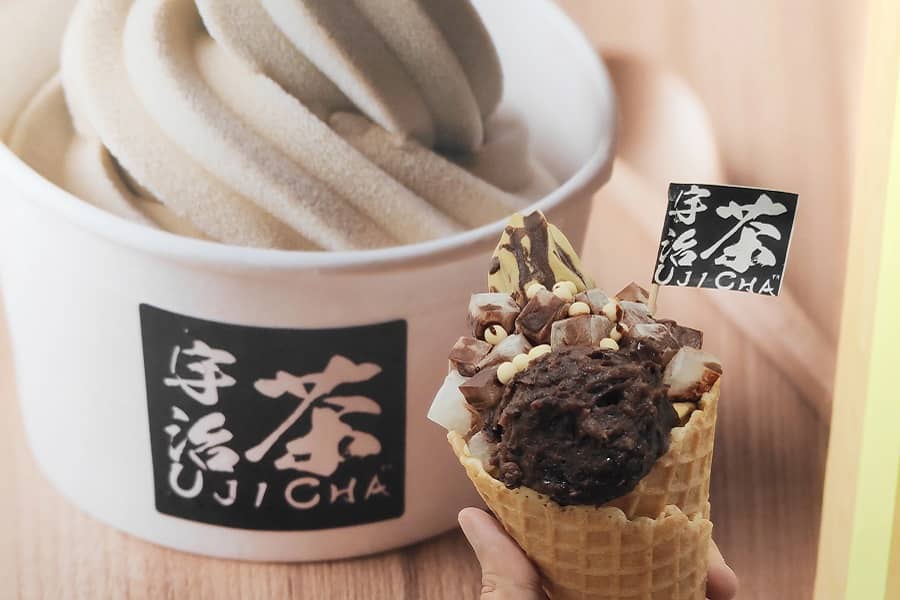
The appearance and packaging of the products are very exquisite, among which the matcha popsicle products are popular with young women, and can be seen by social media at home and abroad. Plate-shaped popsicles are decorated with raw chocolate, dumplings, white jade, frozen fruit, cream, etc. The colors are harmonious, stimulating consumers’ desire to take photos and share, and spontaneously spreading word of mouth for the brand.
(2) Restricted desserts to create scarcity
The restricted dessert includes two aspects, one is the festival restriction, the other is the season restriction.
This year’s Father’s Day is approaching, Itoh Kyuemon launched the Father’s Day bamboo basket set, which contains seven products, including Matcha lamb soup, summer honey orange jelly, Matcha sugar cake, Matcha pudding, Matcha sweet potato, Matcha bun, Matcha cookies and Uji jade dew. The bamboo basket is wrapped with high-grade green cloth, which is full of vintage and quality. In the previous Mother’s Day, we reached a cooperation with Qinggu Plum Wine, and launched a limited commemorative bottle for Mother’s Day at midnight. The bottle is covered with red carnation patterns, which is in line with women’s aesthetics.
In the annual cherry blossom season, the purple sun flower season, the red leaf season and the strawberry season, seasonal products are launched, and adjustments are made in taste and shape. For example, the Cherry Blossom Buffet launched during the Cherry Blossom season has cherry ice cream, Cherry Blossom-flavored white jade buns and Matcha jelly, with the addition of hairpin shaped fruit embodying the traditional Japanese technology; In the red leaf season, Red Leaf Buffet was introduced. On the basis of Mata ice cream, the sweet potato and chestnut of Mingmen Jinshi were added to cook. The jelly in the shape of red leaf visually added autumn feeling to the dessert; In addition to the iconic element of Matcha, the Baffy in the Ziyang flower season is also carved into the shape of Ziyang flower by skilled craftsman.
Limited products create a sense of scarcity and ritual. The concept of limited quantity encourages consumers to shorten the consumption decision-making process. The ingenious appearance also induces consumers to take photos and upload them to social platforms.
(3) Co-branded products, strong and strong combination
Ito Jiuyouwei cooperates with Nestle’s Kit-Kat Chocolate Weihua to launch Uji Matcha flavor cookies, which taste slightly bitter and mellow, neutralize the sweet and greasy feeling of Weihua, and taste mellow but have a fragrance. The cooperation with the giant Chocolate Weihua not only ensures the quality and taste of the products, but also expands its international popularity and improves its brand image.
3. Tea travel integration and brand building
The output of Uji tea is small, so it is not the main export of Japanese tea. Most of Uji tea is still consumed locally or domestically. Therefore, Uji must increase the added value of agricultural products and realize the integrated development of primary, secondary and tertiary industries before farmers can realize income generation. Relying on regional characteristic industries to develop leisure agriculture and realize the integration of three industries is also the plan for agricultural development in many regions of China, but there are many challenges in the concrete implementation.
According to the survey of Uji’s foreign tourists’ visiting motivation, 55% of foreign tourists are mainly attracted by temples and shrines such as the Temple of Equality, and 45% of the tourists’ main purpose is to experience Uji’s tea culture. It can be seen that Uji has made remarkable achievements in the integration of tea and tourism, which has certain reference significance for China’s rural tourism.
(1) Tea field sightseeing, beautiful
The Bureau of Wide-area Revitalization of Mount City in Kyoto invited landscape designers to design tea fields for Uji. The tea fields that produce Matcha are scattered, with different degrees of green, and are recognized as one of the landscape assets of Kyoto, and joined the “Japan’s Most Beautiful Rural Alliance”. In 2015, it was included in the Japanese heritage as the “promenade of eight hundred years of Japanese tea”. Such tea gardens have reached a certain height in aesthetics while ensuring that the quality of crops will not be affected. You can take photos of beautiful scenery with one hand and win the favor of consumers. The Kyoto government shot a promotional film for Uji’s tea fields.
If we want to promote consumption, it is far from enough to mobilize consumers’ visual senses. We must interact with consumers and let them participate wholeheartedly and fully. Uji’s tea field sightseeing activities often include tea experience activities, such as tea picking, tea grinding, etc.
(2) Tea elements in streets and alleys
As soon as you leave Uji Railway Station, you can see the teapot mailbox and the clock of the tea girl. The clock design is unique. The statue of the tea picking girl is immersed in a liquid similar to the tea soup, and it will appear completely at the hour. It is quite ingenious, just like the Mickey Steam-boat Fountain at the entrance of Disneyland, and has high recognition.
According to the history, culture, landscape and other resource characteristics of Uji tea, Uji set up five Uji tea historic streets in the mountain city area to promote local tourism; While enriching the tourist facilities, the charm and value of Uji tea are widely disseminated. In Uji Tanharacho, Uji tea buses and manhole covers will have Uji’s unique logo, such as the illustration of tea women working in the tea field.
The artificial landscape integrates the unique elements of Uji, embellishes the streets and alleys, avoids the embarrassing situation of “one side of a thousand cities”, and strengthens the memory point; It also sets off the tea atmosphere and brings immersive experience.
(3) Fill in freshness with ceremony
Uji will hold Uji tea festival on the first Sunday of October every year. The Uji tea festival is a thanksgiving ceremony, which is a thanksgiving to the three benefactors, Zen Master Rongxi who brought tea back from China to Japan, Master Ming Hui who opened a tea garden in Uji, and the ancestor of the tea ceremony, Qianlixiu. While admiring the achievements of the three benefactors, we also pray for the prosperity of Uji tea and hope that this year’s tea can reach a higher level. The “ceremony of absorbing famous water” in Uji River is one of the highlights of the ceremony. The famous water will be sent to Xingsheng Temple for use in the first soup opening ceremony of new tea held in the main hall. The tea ceremony teacher wore traditional clothes and performed for one and a half hours. During the performance, he could not touch any metal. He took water from a wooden bucket, burned carbon fire, and put tea soup into a ceramic bowl.
Most consumers are unfamiliar with the festival activities, so they can give them a sense of novelty and stimulate their interest. At the same time, the participation of the ceremony can also enable consumers to experience the history and culture related to Uji tea, understand the ingenuity of Uji tea people, so as to have a sense of identity with the brand and more easily produce consumer behavior.
(4) Authorized teahouses combine economic interests and cultural communication
The Uji Tea Village Development Conference identified a number of “authorized Uji tea houses”, which are considered to be able to popularize the tea lifestyle, collect all kinds of delicacies related to Uji tea, and also explain the history, culture and tea making methods of Uji tea, so as to promote the Uji tea brand. More famous teahouses include Marukyu Koyamaen, Itoh Kyuemon, Nakamura Fuji, Tsuji, etc. The decoration style is elegant and incorporates the elements of “Zen”.
Uji Tea House has also done a great job in the deep processing of tea products. In addition to drinking authentic Matcha in the store, consumers can also taste all kinds of Matcha desserts in the store, such as Matcha ice cream, Baffy, Dafu, fern cake, Matcha jelly, etc. It is also difficult for consumers who lack interest in Matcha drinks to remain unmoved by the exquisite and dazzling desserts. In fact, the practice of using Matcha powder as a dessert ingredient has been popular abroad for a long time. In 1996, Haagen-Dazs launched Matcha ice cream; Starbucks’ Matcha Latte and Matcha Star Bingle are also evergreen drinks. Uji Tea House has made great efforts in innovation to meet the changing tastes of a new generation of young people. Each teahouse has its own signature desserts, such as Itoh Kyuemon’s classic Matcha filling honey (including cold weather, Matcha jelly, Matcha ice cream, red beans, oranges, white jade rice dumpling) and Matcha buckwheat noodles; Nakamura Fuji’s Matcha pudding cream is matched with Matcha ice cream. The collocation and color of desserts are carefully designed and beautiful. Consumers naturally take pictures of them and share them on social platforms, and spontaneously spread word of mouth for Uji tea.
In order to popularize the tea lifestyle, many teahouses have tea classrooms in which consumers can have a manual experience of Matcha. There is a gift shop in the teahouse, where you can buy portable packaged tea powder and long shelf life tea snacks.
According to the list provided by the Kinki Economic and Industrial Bureau, Uji has five factories that are open to the outside world and can be visited. Teahouses such as Marukyu Koyamaen and Fushouyuan have their own tea-making plants, which transmit tea knowledge and cultural, healthy and comfortable lifestyle.
(5) Compound marketing means to create international image
The target of this strategy is not only local consumers, but also potential consumers across the country and even around the world. Uji holds a tea gathering for tea ladies and selects Uji Tea Miss once a year, which reflects the Beauty principle in advertising 3B, and uses consumers’ nature to love beautiful things to grab their attention. Design the cartoon image of Tea Prince to reflect the brand character. At the same time, Uji is the stage of the third volume of the famous Japanese literary work “Tale of Genji”, so it deeply digs into the regional culture, develops relevant games in combination with “Tale of Genji”, and carries out publicity on the Internet.